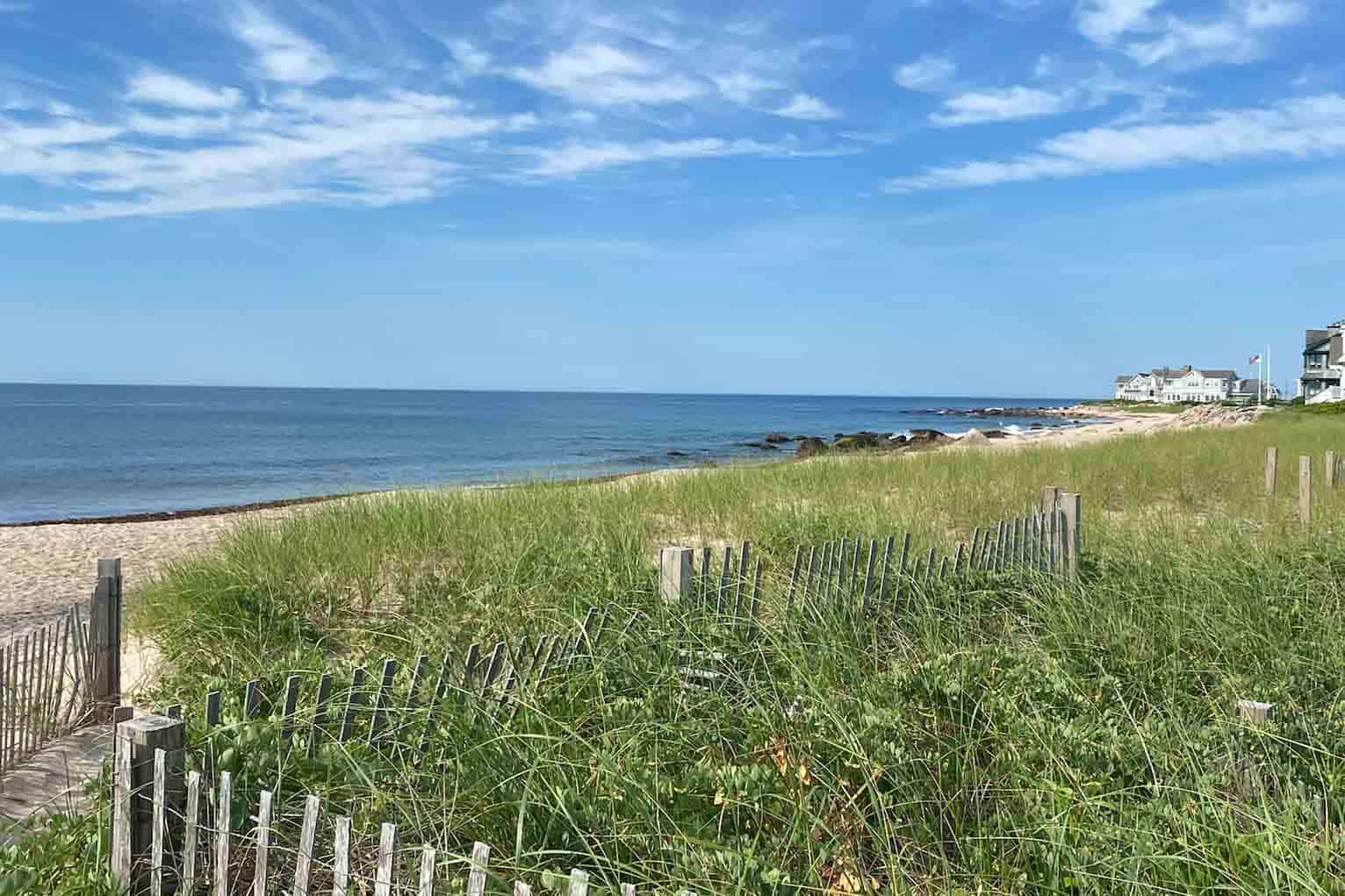

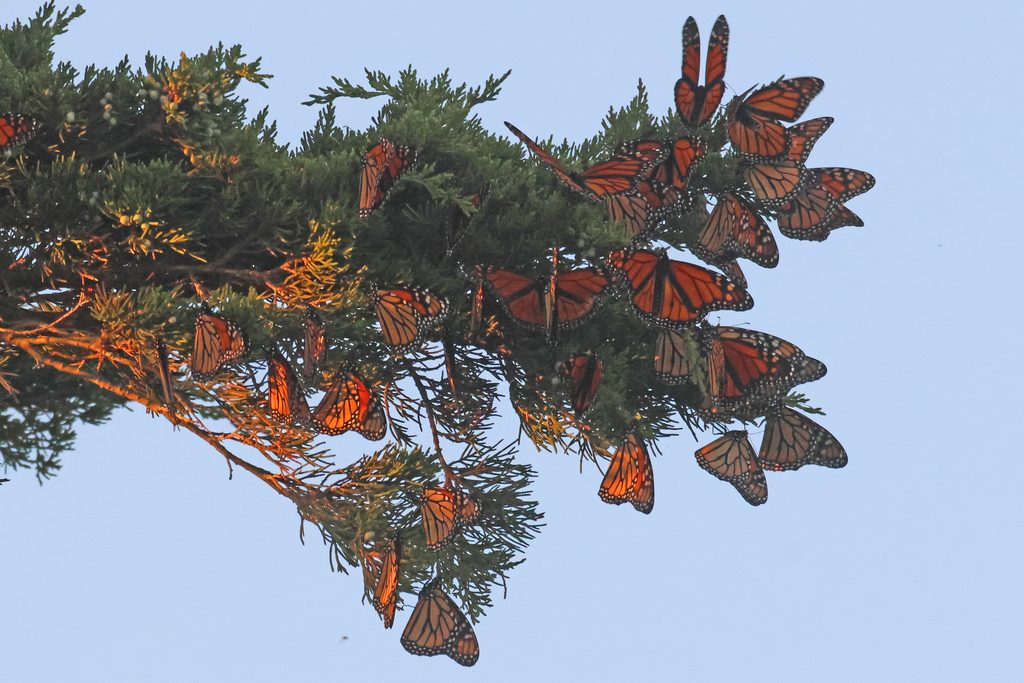
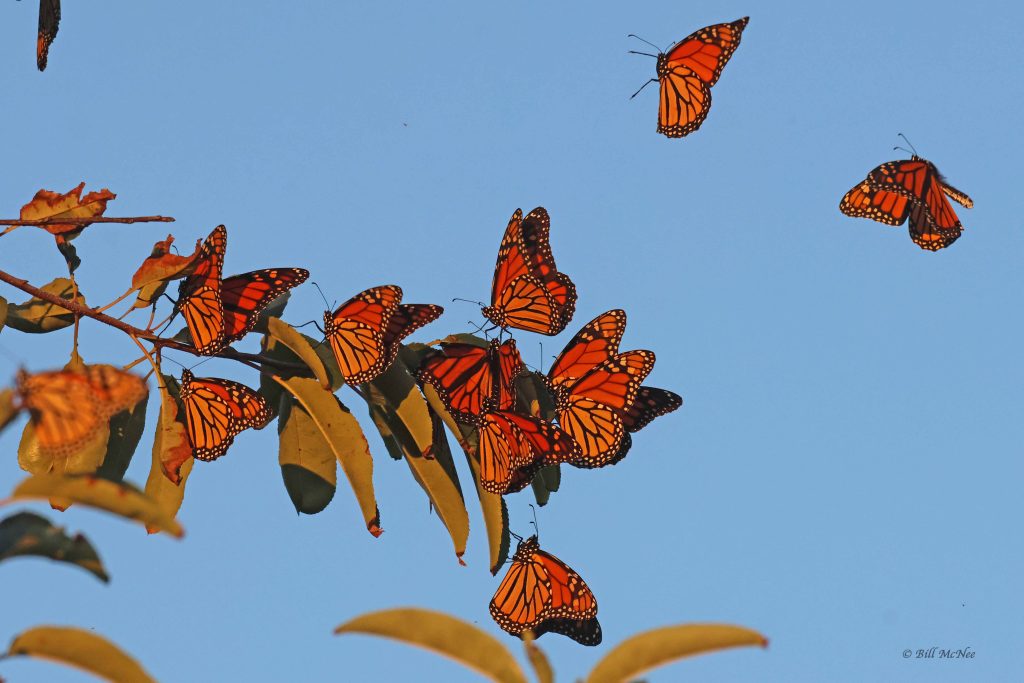
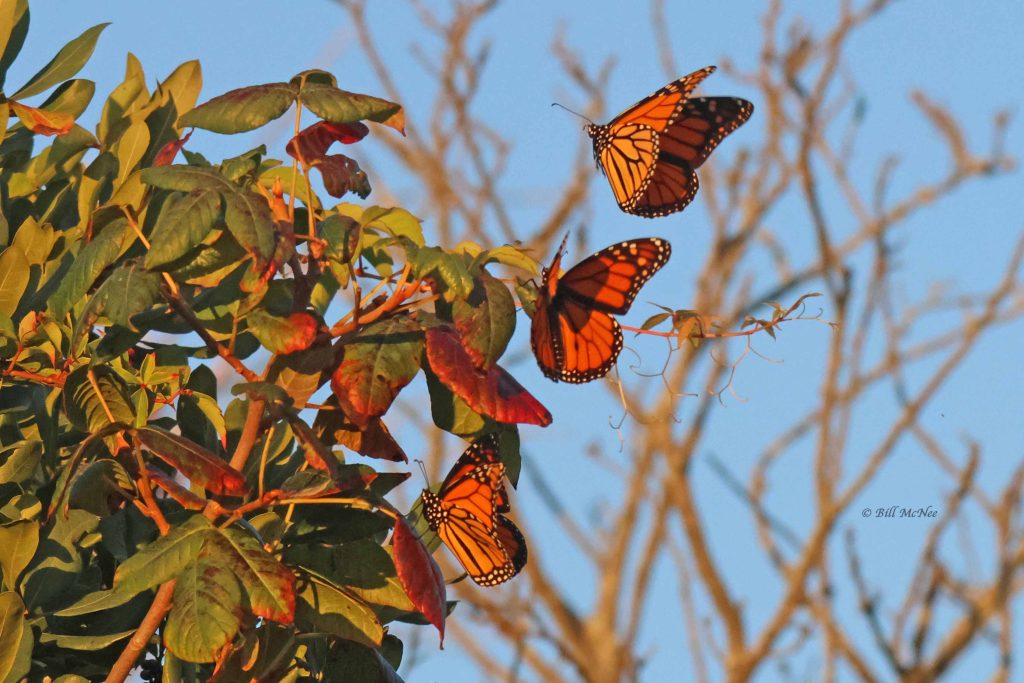
What an amazing sight last evening [Monday, Sept 14], as I headed down to the Quonnie Breachway to get a few more steps in before dinner. While the birding was poor, I quickly noticed a large number of singleton monarch butterflies on the drive to the parking lot. Low and behold, more careful attention turned up (at least) four “clusters” of butterflies, each with 25-50 monarchs, with one cluster approaching 100 monarchs. In total, I estimate that there were greater than 250 butterflies within 150 yards of each other . . . . but I am probably undercounting.
I came home and further researched about these temporary nightime roosts. During migration in late summer and fall, monarchs fly alone during the day and gather in temporary evening clusters (roosts) on trees to stay safe from wind and predators. Typically, they eat nectar from plants like goldenrod to build fat for the long trip to Mexico; however, in our case, they all appeared to prefer the abundant cedar that is present at the breachway.
Eventually, these eastern monarchs will end up 3,000 miles to the south, in the oyamel fir forests of central Mexico (whereas western monarchs head to coastal California).
While the first three generations of monarchs each year live for only two to six weeks each as they journey north during the spring migration, the final late-summer generation enters a state called diapause, living up to eight or nine months to make the entire southward journey. Each successive generation inherit celestial and magnetic cues, as the monarchs use a solar compass linked to a circadian clock in their antennae alongside the Earth’s magnetic field to find their way home.
The peak migration window in Rhode Island runs through September and well into October.
Hats off to the many fellow Quonnie Neck residents who have been extensively planting milkweed (and native nectar-rich flowers) for the past five + years in support of the monarch butterfly. As Carrollynne Murphy aptly shared, “Quonnie is such an important way station in their migration path.”
Here’s a few shots, along with a video of one of the clusters. (Note that you can enlarge the video after turning on, by hitting the square box in the lower right corner.) Please forgive the low light photography, as sunset was approaching.
Bill McNee
N.B. – content taken from a social media post published on Sept 14, 2026.